Oil Tank Replacement
Homeowner needs evaluation or replacement of an existing residential heating oil tank.
Serving Bangor and surrounding Penobscot County communities
Aging, rusted, leaking, basement, aboveground, and unused heating oil tanks all call for careful evaluation. Bangor Oil Tank Removal helps homeowners request oil tank replacement, removal, inspection, leak-related service, decommissioning, and underground tank guidance from appropriate local providers.
Request service anytime. Calls answered during normal business hours.
Why homeowners call
Most heating oil tanks fade into the background until something changes. A home inspection points out corrosion. A faint fuel odor shows up near the basement stairs. A tank leg looks uneven. Rust gathers around fittings. A buyer asks for documentation before closing. Those moments are stressful because the tank is tied to heat, safety, property value, and environmental risk all at once.
This site is built for Bangor-area homeowners who need a practical next step. It is not a junk-removal directory and it is not a place for do-it-yourself tank work. The focus is residential heating oil tank replacement, with removal, inspection, decommissioning, leaking tank response, and buried tank evaluation handled as related service requests.
A replacement request can involve more than swapping one tank for another. The old tank may need to be disconnected and removed, remaining fuel may need to be addressed by a qualified professional, access may be tight, and the new tank location has to make sense for the property. A removal request may be simple if the tank is empty and accessible, or more involved if it is in a basement, shows staining, or is part of a property sale.
Bangor Oil Tank Removal keeps the customer path direct: call now or request a tank evaluation. Your request can then be routed toward a provider suited for the tank type, location, and urgency. The goal is to help you get from uncertainty to a professional assessment without turning a single tank issue into a maze.
Focused tank services
Choose the tank service that best matches the situation. If you are unsure, the form includes a not sure option so a provider can start with evaluation.
Homeowner needs evaluation or replacement of an existing residential heating oil tank.
Homeowner wants an old, unused, disconnected, or problem heating oil tank removed.
Homeowner needs professional evaluation for removing a basement or indoor heating oil tank.
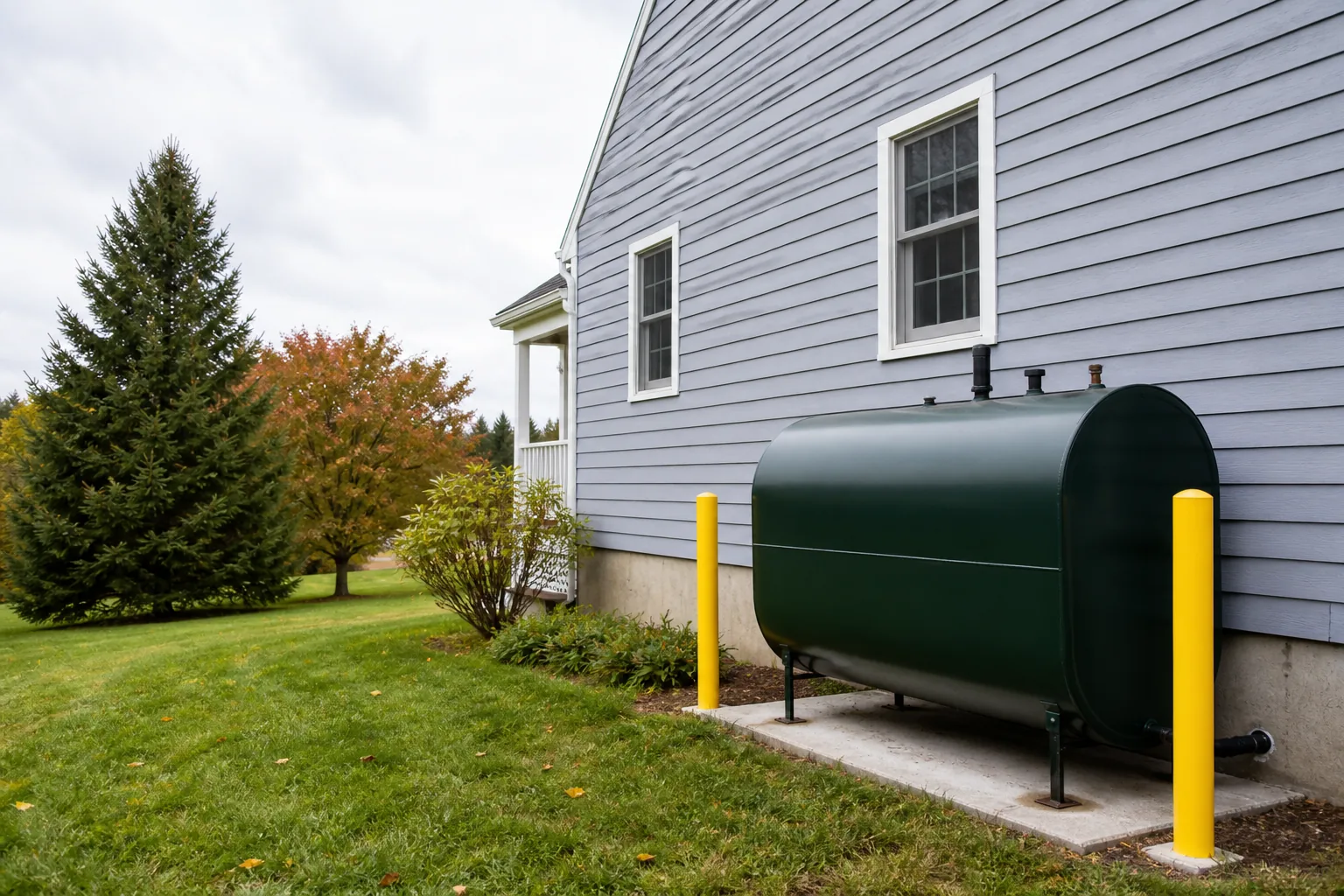
Homeowner needs replacement evaluation for an outdoor or otherwise aboveground heating oil tank.
Homeowner has a suspected or visible leak and needs qualified help quickly.
Homeowner wants a qualified opinion before deciding on replacement, removal, or leak response.
Homeowner needs an unused tank evaluated, documented, removed, or otherwise addressed.
Homeowner suspects or knows there is a buried fuel oil tank and needs qualified evaluation.
Primary service focus
Heating oil tank replacement is the core service focus because many tank problems are not solved by simply hauling away the old equipment. If the home will continue using heating oil, the property needs a safe replacement path that accounts for the existing tank condition, indoor or outdoor placement, access, fuel lines, venting, support, and the way the heating system is currently arranged.
Warning signs do not always mean immediate replacement is the only answer, but they do mean the tank deserves attention from someone qualified to evaluate it. Rust around seams, pitting near the bottom, oil odor, damp spots, staining, loose or uneven legs, and damaged fittings can all change the level of urgency. A professional assessment helps separate cosmetic wear from conditions that could create larger property or environmental concerns.
For Bangor homeowners, timing matters. A tank issue discovered during a sale, before a heating season, or after a leak concern can disrupt plans quickly. Requesting an evaluation early gives a contractor more room to determine whether replacement, removal, decommissioning, leak response, or further testing is appropriate. It also helps avoid hurried decisions when the tank is already causing visible trouble.
The typical path starts with a simple description of the tank: where it sits, whether it is still in use, what you have noticed, and what outcome you want. From there, a provider can evaluate the condition, discuss replacement or removal options, and explain the next steps that fit the property. This site does not replace that professional judgment; it helps homeowners make the right connection sooner.
Helpful signs to watch
These signs do not prove a specific legal requirement or diagnosis by themselves, but they are practical reasons to request an oil tank evaluation.
Simple request path
Request service online or call the Bangor-area phone number.
Describe the tank location, condition, and service you may need.
Your request is reviewed so it can be matched with appropriate local help.
A qualified provider evaluates the tank and property conditions.
Replacement, removal, inspection, decommissioning, or leak-related next steps are determined.
Bangor-area coverage
Requests are accepted for Bangor, Hermon, Brewer, Hampden, Orono, Old Town, Glenburn, Veazie, and Eddington. The initial site keeps Bangor relevance strong while giving surrounding homeowners a clear place to request help.
View the service areaQuestions homeowners ask
Common reasons to request an evaluation include rust, corrosion, seepage, fuel odor, unstable legs, staining, or a tank that has been flagged during a home inspection. A qualified contractor can look at the tank condition and explain whether replacement, repair evaluation, removal, or monitoring is appropriate.
Many basement tanks can be removed, but access, fuel remaining in the tank, tank size, stairs, finished walls, and safety conditions all matter. Homeowners should not cut, drain, or move a tank themselves. Request an evaluation so the right removal approach can be discussed.
The old tank is typically disconnected, handled, and removed according to the job conditions and applicable requirements. The details depend on whether the tank is indoors, outdoors, still connected, empty, leaking, or difficult to access.
Yes. Many homeowners explore replacement before a visible leak appears, especially when corrosion, age-related wear, inspection concerns, or a real estate transaction raises questions. Early evaluation can reduce pressure and help plan the work.
Underground tanks may require excavation, testing, environmental review, and properly qualified contractors. If you suspect a buried tank, request an evaluation rather than disturbing the area yourself.
Avoid trying to drain, patch, move, or cut the tank yourself. Keep people away from the affected area, avoid ignition sources, and contact qualified help promptly. Emergency handling and environmental response can depend on the situation.
Timing varies with access, tank location, whether fuel remains, the condition of connections, contractor availability, and whether other work is needed. A provider can give a more realistic expectation after reviewing your property.
No. It is usually better to call first and describe what you know. Fuel handling should be discussed with a qualified provider because improper draining or transfer can create safety and environmental problems.
Unused tanks are common after heating changes, home purchases, or basement renovations. A removal request should still be handled professionally because old tanks may contain residue, odor, or unknown condition issues.
Requests are accepted for Bangor and nearby Penobscot County communities including Hermon, Brewer, Hampden, Orono, Old Town, Glenburn, Veazie, and Eddington.
A short call or form request is enough to start. Share the tank location, service concern, and property city so the request can be routed clearly.